Keep one shared foundation (offer, audience, brand and naming rules), let each platform keep its own structure and creative formats, report each platform against its own history instead of summing conversions, and move budget based on your real sales.
1. Write one brief, then adapt it
Start every campaign from a single brief: what you sell, who it’s for, why they should care, and what action you want. That brief stays the same everywhere. What changes per platform is the execution: keyword-focused text on Google Search, thumb-stopping visuals on Meta, vertical video on TikTok, inspirational imagery on Pinterest.
2. Respect each platform’s structure
Forcing one structure on every network causes problems. Google Search campaigns are organized around keywords and ad groups; Meta campaigns around ad sets with an audience, budget and placements; TikTok uses ad groups; Pinterest organizes campaigns around Pins. Build each campaign the way its platform expects, so its delivery systems can do their job.
3. Standardize naming and UTMs
Consistent names are what make multi-platform reporting possible. Choose one pattern, for example market_objective_product_date, and use it everywhere. Do the same for UTM parameters (utm_source, utm_medium, utm_campaign) so your analytics tool can group traffic correctly regardless of which platform sent it.
4. Report honestly across platforms
Each platform attributes conversions with its own rules and windows, and they often overlap: the same purchase can appear in Google’s and Meta’s reports. So:
- Compare each platform with its own history, not with the other platforms’ numbers.
- Use your own analytics or sales data as the source of truth for totals.
- Watch spend, cost per result and trend direction per platform, side by side.
5. Decide budgets with rules, not moods
Set a target cost per acquisition or return on ad spend per platform, and agree in advance what happens when a platform beats or misses it, for example moving 10% of budget after two weeks above target. Written rules prevent overreacting to a single good or bad day, and they’re easy to automate later.
6. Keep one list of what needs attention
With several accounts, the risk isn’t a lack of data; it’s missing the one thing that broke. Check a single list each day: rejected ads, campaigns over budget, tracking that stopped reporting, drafts waiting to launch.
A weekly routine that works
- Monday: review last week per platform against its own targets.
- Midweek: refresh creative where performance is fading; launch new tests.
- Daily (5 minutes): check the attention list and budgets.
- Monthly: rebalance budget across platforms using your own sales data.
How OrivenAI supports this
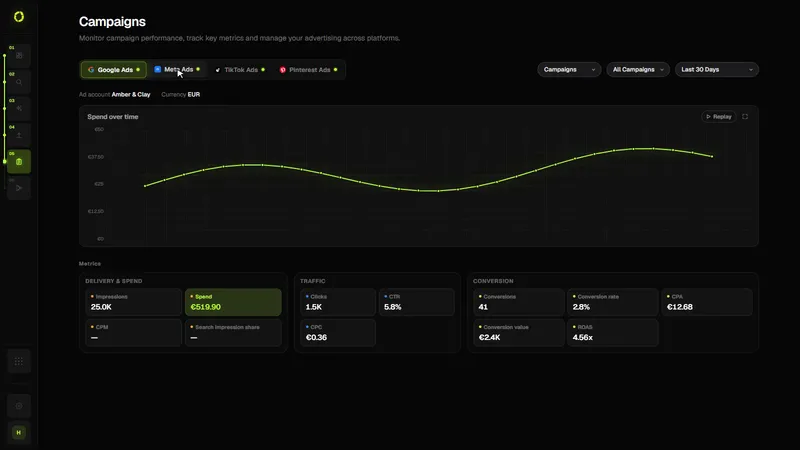
OrivenAI is built around this workflow. Your business and brand context lives in Control Center and informs every campaign; Create adapts one brief into each platform’s structure for Google Ads, Meta Ads, TikTok Ads and Pinterest Ads; Planning includes naming and UTM templates; Launch shows each draft’s readiness before you publish; Campaigns shows each platform’s results side by side; and Control Center lists what needs your attention. See cross-platform ad management.
Sources
Official documentation this guide relies on, last checked . Platforms change their rules often; check the source before you rely on a number.