Google Ads is strongest at capturing existing demand: people already searching for what you sell. Meta Ads (Facebook and Instagram) is strongest at creating demand: showing your product to people likely to want it before they search. Most growing businesses use both, for different jobs.
The core difference: intent vs discovery
On Google Search, the user tells you what they want by typing a query. Your ad answers it. That’s why search campaigns often convert well for problems people actively look up, such as “emergency plumber” or “running shoes for flat feet”.
On Facebook and Instagram, people are scrolling, not searching. Meta’s systems decide who sees your ad based on audience signals and how people engage. That makes Meta good at introducing products people didn’t know to look for, and at reaching them visually.
How they compare
| Google Ads | Meta Ads | |
|---|---|---|
| Main trigger | Search queries (plus intent signals on other Google surfaces) | Audience signals and engagement |
| Strongest at | Capturing demand that already exists | Creating demand; visual products |
| Core creative | Text ads in Search; images and video in Performance Max and Demand Gen | Images, video, carousels; vertical formats for Stories and Reels |
| Structure | Campaigns → ad groups → ads, keywords in Search | Campaigns → ad sets (audience, budget, placements) → ads |
| Typical campaign types | Search, Performance Max, Demand Gen, Shopping, Video | Objectives such as sales, leads, traffic, awareness |
When to start with Google Ads
- People already search for your product or the problem it solves.
- You sell a service with urgent, local or high-intent demand.
- You want traffic from people comparing options right now.
When to start with Meta Ads
- Your product is new, visual or impulse-friendly, and few people search for it yet.
- You can describe a clear audience by interests or demographics.
- You have, or can make, strong images and short videos.
Why many businesses run both
The platforms often work as two halves of one funnel: Meta introduces the product, and Google captures people when they later search for it or for your brand. Running both does make measurement harder. Each platform attributes conversions with its own rules, so the same sale can appear in both reports. Compare each platform’s results against its own history and your actual sales, rather than adding their conversion numbers together.
Running both without doubling the work
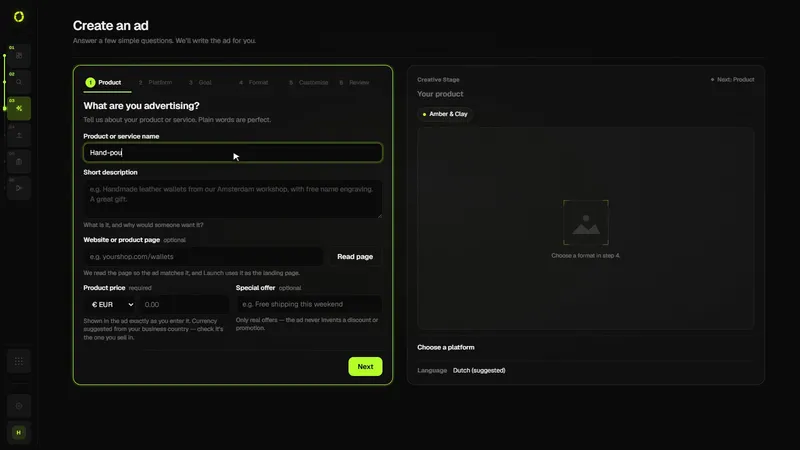
The work that doesn’t have to be duplicated is the thinking: your offer, audience and brand. In OrivenAI you describe your business once, create a campaign for each platform in its own structure (Search, Performance Max or Demand Gen on Google; Facebook and Instagram placements on Meta), launch each when it’s ready, and follow both side by side in Campaigns. See cross-platform ad management in OrivenAI.
Sources
Official documentation this guide relies on, last checked . Platforms change their rules often; check the source before you rely on a number.